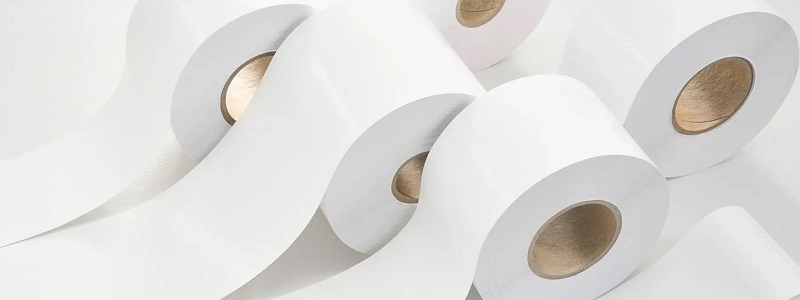
Woodfree offset printing paper is one of the most widely used paper grades in commercial printing. Despite the name, woodfree does not mean the paper is free of wood fibers; rather, it denotes that the paper contains chemical pulp fibers without groundwood content, giving it superior printing qualities compared to mechanical pulp papers.
What Does “Woodfree” Mean? A Clarification
In papermaking terminology:
- Woodfree paper is made predominantly from chemical pulp (such as kraft or sulfite pulp), from which lignin and most non-cellulosic components have been removed.
- It is not free of wood — cellulose fibers still come from wood — but it is free from groundwood/ mechanical pulp.
Why Is This Important?
Mechanical pulp retains lignin, which:
- Causes paper to yellow and deteriorate over time.
- Reduces strength and alters surface properties.
By contrast, woodfree chemical pulp delivers:
- Higher brightness and whiteness
- Greater archival stability
- Cleaner printing surfaces
This makes woodfree paper particularly suited for high-quality offset printing where image fidelity, smoothness, and durability matter.
Manufacturing Process: How Woodfree Paper Is Made
Raw Materials
- Wood chips from softwoods (e.g., spruce, pine) and hardwoods (e.g., birch, eucalyptus) are typically used.
- Quality cellulose fibers are extracted via chemical pulping processes.
Pulping
Chemical pulping removes lignin and hemicellulose:
- Sulfate (Kraft) pulping produces strong, long fibers.
- Sulfite pulping produces bright, easily bleached pulps.
The result is high-purity cellulose, reducing impurities that interfere with printing quality.
Refining and Beating
Fibers are refined for:
- Controlled fibrillation
- Optimized bonding during sheet formation
This balancing act influences:
- Smoothness
- Bulk
- Print ink absorption
Sheet Formation and Pressing
On the Fourdrinier or twin-wire paper machine:
- Fibers form a wet sheet
- Water is pressed and removed
- Mechanical action aligns fibers for uniform formation
Drying
Drying cylinders reduce moisture to target levels (typically 4–6% for printing paper).
Surface Treatments
Woodfree offset papers often receive:
- Calendering: Produces smooth, even surface.
- Coating: Some grades include clay, calcium carbonate, or resin coatings for enhanced performance (e.g., coating for improved ink holdout).
Physical and Optical Properties
Woodfree offset printing paper is engineered to meet exact specifications for high-quality print performance.
Key attributes include:
Brightness & Whiteness
- Brightness: reflects blue light; influences perceived contrast.
- Whiteness: indicates how close paper is to ideal white across visible spectrum.
High brightness/ whiteness allow:
- Sharp text
- Vivid color reproduction
Smoothness
Crucial for offset printing because:
- Consistent ink transfer depends on uniform surface
- Rough or uneven surfaces cause dot gain variability
Opacity
Opacity prevents show-through in double-sided prints — critical for books, brochures, catalogs.
Tensile Strength & Tear Resistance
Chemical pulp fibers impart:
- Strong internal bonding
- Resistance to tearing
Caliper (Thickness) & Bulk
Different grades balance:
- Caliper (microns)
- Basis weight (g/m²)
- Printing feel and durability
Bulk affects:
- Page thickness
- Folding characteristics
Technical Performance in Offset Printing
Offset lithography relies on precise interaction between plate, blanket, and paper surface.
Ink Transfer & Absorption
Woodfree papers are optimized to:
- Accept ink without over-absorption
- Maintain crisp edges and fine detail
- Deliver stable dot reproduction
Excess absorption causes dot gain and dull colors; too little risks smudging.
Surface Energy
Proper surface energy ensures:
- Good ink wetting
- Reliable fountain solution balance
- Controlled drying
Moisture Content & Run-Ability
Paper with:
- Stable moisture resists curling or web breaks
- Balanced tensile strength tolerates high press speeds
Dot Gain Control
Offset printing defines dot gain as the increase in size of halftone dots during printing.
Woodfree papers help minimize unpredictable gain by:
- Providing consistent surface porosity
- Reducing ink penetration into fibers
Common Grades and Specifications
Woodfree offset papers are available in a wide range of grades depending on intended use:
| Grade Name |
Typical Basis Weight (g/m²) |
Key Uses |
| Text |
60–120 |
Brochures, magazines |
| Cover |
120–350+ |
Book covers, business cards |
| Bond |
60–100 |
Letterheads, stationery |
| Book |
70–150 |
Text blocks of books |
Coating vs. Uncoated Woodfree Papers
Uncoated Woodfree (WFU)
Characteristics:
- Natural surface
- Light ink absorption
- Softer tactile feel
Good for:
- Books
- Letterheads
- Manuals
Coated Woodfree (WFC)
Coatings include:
Benefits:
- Enhanced color saturation
- Better detail reproduction
- Reduced show-through
Used for:
- High-end brochures
- Catalogs
- Art books
Environmental and Sustainability Considerations
Fiber Sourcing
Look for certification:
- FSC® (Forest Stewardship Council)
- PEFC
to ensure responsible forestry practices.
Acid-Free and Archival Permanence
Woodfree papers with high permanence:
- Resist yellowing
- Are suitable for archival applications
Recyclability
Woodfree papers are generally highly recyclable due to:
- Low lignin content
- Clean fiber composition
Practical Applications
Woodfree offset printing paper is used extensively in:
- Books & educational materials
- Magazines and catalogs
- Corporate stationery
- Brochures, leaflets, and marketing collateral
- Annual reports and financial documents
Its balanced performance makes it a workhorse in commercial print environments.
Choosing the Right Woodfree Paper
When specifying for a job, consider:
| Factor |
Impact |
| Basis weight |
Rigidity, feel, durability |
| Surface finish |
Ink holdout, color strength |
| Opacity |
Show-through control |
| Brightness/Whiteness |
Contrast, visual appeal |
| Coating |
Ink drying, color saturation |
| Environmental Certifications |
Sustainability goals |
Future Trends in Woodfree Paper
Innovations include:
- Enhanced surface treatments for digital-offset hybrid presses
- Lower basis weights with maintained opacity
- Improved recycled content with minimal performance loss
- Less energy-intensive production processes
These continue to align woodfree papers with evolving print and environmental demands.
Woodfree offset printing paper represents a high-performance, versatile solution in commercial printing. Its careful balance of fiber quality, surface properties, and optical characteristics makes it ideal for applications where image fidelity, consistency, and durability are essential. Understanding the technical aspects of woodfree paper helps printers, designers, and buyers make informed decisions that enhance print quality and sustainability.